
Solvent recycling no longer exists as a side conversation in manufacturing; it now drives real savings, measurable compliance outcomes, and operational clarity. High-consumption industries, such as commercial painting, boatbuilding, cabinetry, and railcar refurbishment, rely on chemical-intensive processes every day. When unmanaged, solvent waste requires expensive pickups, exposes facilities to EPA oversight, and erodes long-term profitability.
Plants running three drums or more each month often reclaim their investment in less than a year by installing closed-loop systems with no moving parts and minimal maintenance needs. Today’s most effective operations demand equipment that supports recycling at the point of use, built with technology that eliminates risk and increases yield.
Distillation Units and Automated Separation Control
Manufacturers rely on distillation units to recover usable solvents by separating them from resin, pigment, oil, or adhesive waste. Each cycle begins with heat transfer that elevates the solvent to its boiling point, allowing vapor to rise and condense in a clean collection chamber. Facilities reduce new solvent purchasing and waste drum volume every time they complete a successful distillation run.
Meanwhile, automated control panels now guide every phase of the process using pre-programmed heat curves and safety shutdowns. Operators gain tighter repeatability by removing the guesswork from temperature control, cycle timing, and batch volume. Consistency is crucial when plants operate multiple shifts or work across different lines and material types.
Industrial solvent recycling requires output that meets internal purity requirements on the first pass. Technicians and compliance teams depend on consistent results to prevent disruptions in production and minimize regulatory exposure. Distillation remains a key technology driving solvent recycling in manufacturing, as it is applicable across all solvent-intensive applications with a minimal footprint.
Systems designed for batch processing accommodate cabinet shops, fiberglass fabricators, and adhesive producers with a steady throughput. Leaning on high-efficiency distillation improves the chemical lifecycle while protecting operator time and keeping solvents in constant rotation. Less waste means fewer pickup appointments and a reduced documentation burden on environmental teams.
Vacuum-Assisted Recovery Systems
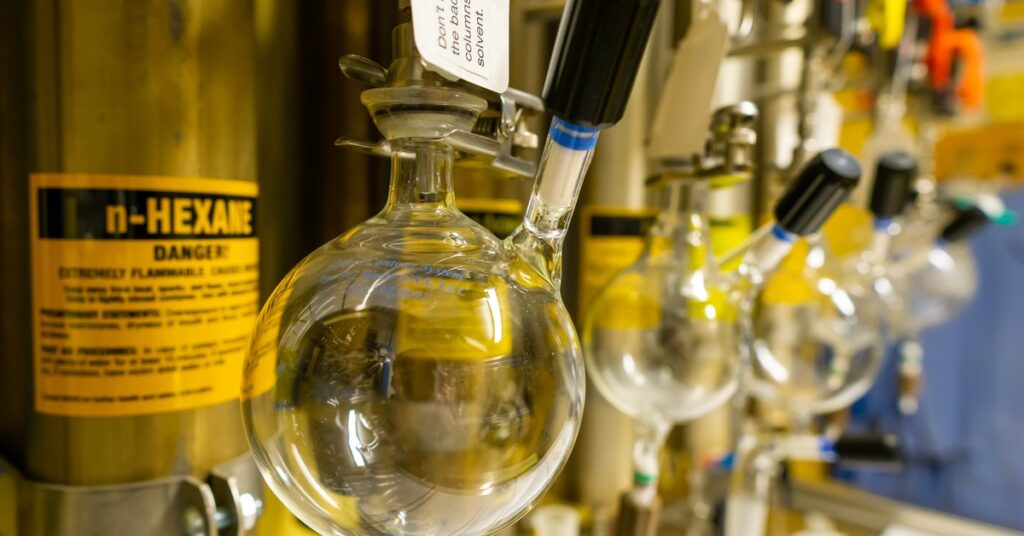
Vacuum-assisted solvent recovery units create low-pressure environments that accelerate evaporation without applying high heat. Solvents with high flash points or sensitive chemical compositions recover more safely when boiled below their standard temperature threshold. Better control reduces fire risk, improves yield, and supports process compatibility across solvent families.
Vacuum systems also reduce energy usage by relying on pressure shifts rather than brute-force thermal output. Plants running five or more recovery cycles per day save thousands annually through lowered electricity consumption and improved equipment longevity. Less heat equals less wear on gaskets, seals, and containment tanks.
With vacuum-assisted systems, you gain flexibility when handling chlorinated solvents, acetates, and slower-evaporating hydrocarbons. Paint booths using complex coatings or temperature-sensitive compounds benefit directly from this pressure-based recovery method. Adaptable systems that adjust to solvent chemistry without requiring major reconfigurations enable tighter resource management and lower labor costs.
Recovery under vacuum has become a key technology driving solvent recycling in manufacturing because it maintains performance while extending system lifespan. Maintenance schedules shrink, and process parameters stay within safe operating ranges even under demanding loads. Vacuum recovery gives manufacturers the control they need without compromising safety or output.
Closed-Loop Integration With Production Lines
Facilities that integrate solvent recovery directly into paint systems, wash tanks, or spray stations minimize operational interruptions. Closed-loop systems eliminate the need for constant barrel swapping and reduce human exposure to vapor-heavy areas by automatically collecting used solvents at the source. This proximity improves safety, cycle efficiency, and overall waste reduction.
Direct integration allows teams to stay compliant without assigning additional labor to solvent management. Systems send used material directly to recovery tanks, reprocess solvents to spec, and return it to the line with minimal delay. Operators can continue working while equipment handles chemical recycling simultaneously.
Paint-heavy operations, such as railcar shops and fiberglass manufacturers, benefit from that embedded performance. Manual handling disappears, so technicians focus on production quality rather than material logistics. Overall, closed loops increase uptime, cut costs, and simplify hazardous material records.
At Solvent Waste Management, Inc., we provide industrial solvent recovery systems built for serious production environments that cannot afford inconsistency. Our clients reduce their third-party waste pickups, avoid EPA classification thresholds, and keep their facilities focused on throughput—not solvent disposal.
Solvent-Specific Filtration Media and Add-Ons

Many operations enhance their recovery results by using inline or pre-distillation filtration tailored to the contaminants in their solvent. Filters capture pigments, oils, waxes, or polymers that would otherwise degrade recovery yield or foul distillation surfaces. Matching the filtration type to the solvent formula increases performance and extends the machine’s productive lifespan.
Carbon filters remove volatile organic residues, while mechanical membranes separate fine particles from the solution before reintroduction into the cycle. Facilities that paint with multi-part coatings often install dual filtration stages to maintain clarity across multiple shifts. Solvent lines carrying adhesives or gel-forming materials benefit most from wide-surface filters with high load capacity.
Filtration media also plays a critical role in protecting system integrity from buildup and chemical damage. Extended filter life means less downtime, fewer clogs, and tighter quality assurance across cycles. Operators replace filters on a routine basis based on solvent throughput and batch processing schedules.
Combined systems utilizing filtration and distillation achieve a performance advantage over single-mode setups. Engineers designing recovery processes around media compatibility drive higher reclaim percentages and improved consistency. These add-ons enhance results without complicating core machine design or requiring custom builds.
Remote Monitoring and Digital Diagnostics
Smart solvent recovery systems utilize built-in sensors to monitor fluid levels, temperature cycles, and component health in real time. Plant managers receive email or SMS alerts when recovery rates drop, cycle times shift, or parts require attention. Early intervention prevents unplanned downtime and avoids chemical contamination events.
Using remote-access dashboards allows facilities to manage multiple units across floors or buildings without requiring additional labor. Technicians log into cloud-based portals to evaluate cycle trends, maintenance needs, and historical performance. Teams that rely on KPI reports use machine data to validate productivity and document cost savings over time.
Digital control reduces reliance on onsite inspections and paper logs, both of which introduce human error risks. Compliance teams use automated solvent tracking for EPA reporting, chemical inventory management, and internal cost audits. Plants that run solvent through recovery tanks daily cannot afford to operate without precision tools.
Software-augmented diagnostics enhance recovery consistency while providing operators with full transparency into system operation. As solvent costs rise and waste regulations tighten, digital visibility becomes an operational asset—not just a convenience. Manufacturers with integrated monitoring gain stronger ROI and better compliance posture from day one.
Focus on Your Future With Solvent Waste Management
Solvent recovery technology now defines modern manufacturing success for companies that rely on high-volume chemicals to maintain production efficiency. The right system reduces waste, protects budgets, supports worker safety, and keeps your operation off the EPA’s radar.
Every dollar saved through recycling compounds over time into stronger margins and smoother operations. Decision-makers who prioritize recovery technology gain tools that serve both environmental and business outcomes. At Solvent Waste Management, Inc., we support that mission with long-lasting, domestically-made systems that solve problems and protect your bottom line—day after day.
Contact us today to discuss your solvent volume, review your potential savings, and find the right system for your production needs. Our Texas-based team builds equipment that delivers results where it matters most—on your floor.